Disclosure: This guide includes recommended books, LEGO sets, and learning resources. Some links may become affiliate links in the future. If you buy through those links, Read Build Discover may earn a small commission at no extra cost to you. Recommendations are chosen for their learning value and connection to the activity.
Quick Facts
- Best for: Elementary builders
- Time: 45-90 minutes
- Skills: Literacy, engineering, collaboration
- Core idea: Strong communities need strong structures
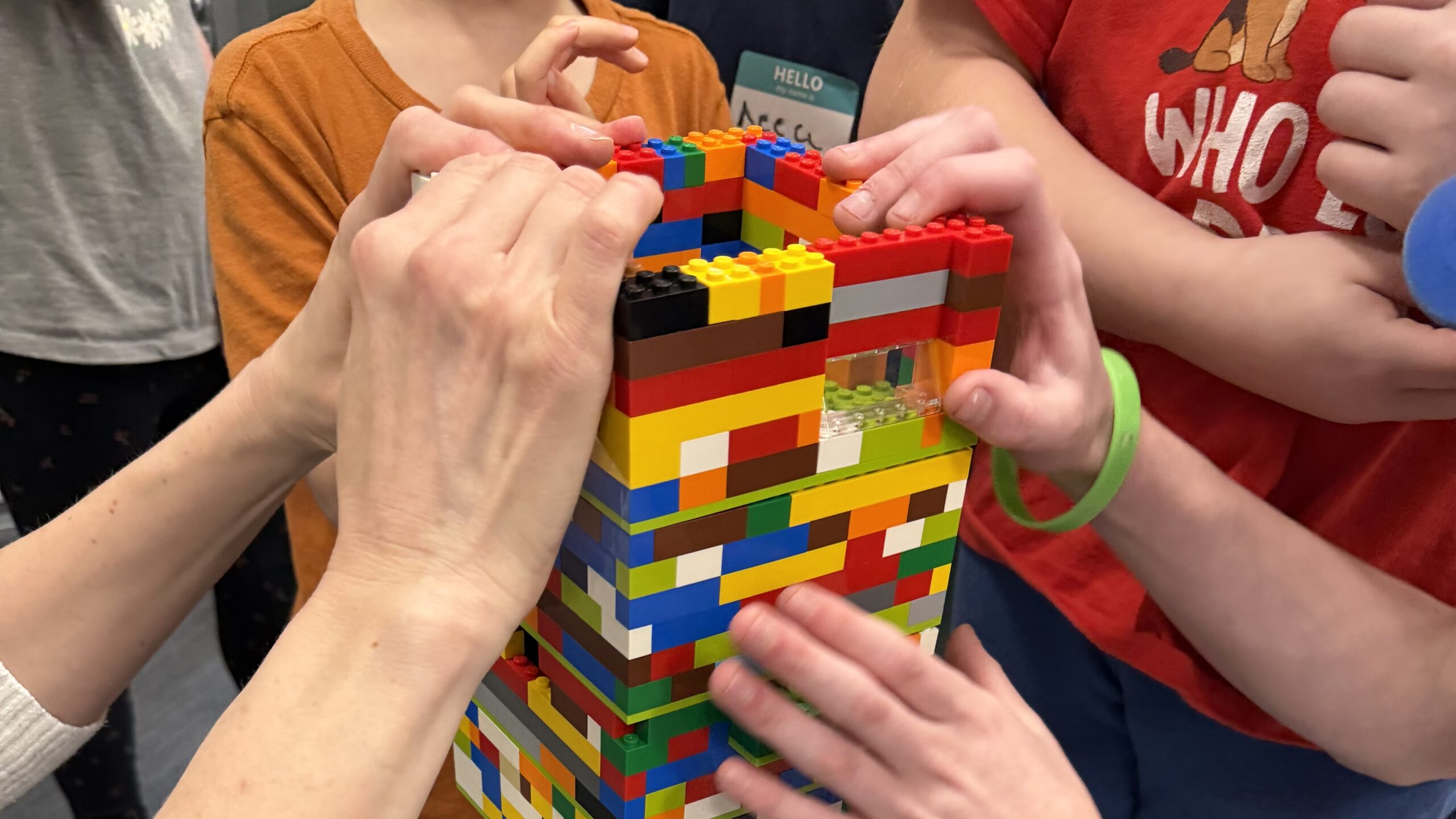
What happens when you combine structural engineering, community design, and a room full of eager young builders? You get a towering, 26-story LEGO masterpiece and an unforgettable afternoon of learning.
This group project challenged kids on three levels: working together, imagining an apartment building as a small community, and thinking carefully about what keeps a tall structure standing.
Read: Books and Media That Support the Build
Before building, connect the activity to books and media about skyscrapers, construction, neighborhoods, and community life.
- Video: Why doesn’t the Leaning Tower of Pisa fall over? by Alex Gendler. This helps introduce soil, gravity, and structural problem solving.
- Book: Cool City by Sean Kenney. A strong visual bridge between LEGO building, city design, transportation, and architecture.
- Book: Up Goes the Skyscraper! by Gail Gibbons. A useful introduction to the real construction process.
- Book: Hard Hat Zone by Theo Baker. A strong follow-up to Up Goes the Skyscraper!, with photos that make heavy equipment and construction details easier to see. Best for kids interested in big machines; otherwise optional.
- Book: Windows by Julia Denos. A gentle way to connect an apartment building to the lives and stories inside a neighborhood.
- Book: Thank You, Omu! by Oge Mora. A beautiful community-centered story about generosity and neighbors.
Build: The Apartment Tower Challenge
Each child designed one apartment floor for a shared tower. Before a floor could be added, it had to pass a playful building inspection.
The inspector checked two important engineering ideas:
- No gaps: Bricks had to be pressed down completely. Tiny gaps become bigger problems as a tower gets taller.
- Connected floors: Each floor needed exposed studs on top and a way to connect securely to the floor below.
The printable building permit made the inspection feel official and helped kids slow down, revise, and explain their design choices.
The coveted lobby and roof were assigned to two of the older children in the room.
The Helpful Piece: 16 x 16 Plates
For this project, 16 x 16 plates worked better than traditional baseplates because they could connect to bricks above and below. I used bright green plates so the shared structural pieces were easy to identify and did not disappear into the general brick bins.
You can search LEGO’s Pick a Brick service for similar pieces when planning a modular tower build: LEGO Pick a Brick.
Discover: Questions to Ask After the Build
- What made some floors stronger than others?
- How did your apartment design show who lived there?
- What would you change if the tower had to survive an earthquake?
- How is an apartment building like a small neighborhood?
- Where did you have to cooperate or revise the plan?
The kids could see engineering, community, and storytelling working together. Every floor was different, but the tower only worked when the pieces connected.
The Best Part? The Demolition!
Something I didn’t fully anticipate was the absolute fever pitch of excitement the children had for destroying our creation. After admiring our structural feat, we held a controlled countdown and let the kids collapse the tower. It turned out to be the most exhilarating part of the whole build!
Continue the Learning at Home
If your builder wants to keep exploring tall buildings, city systems, and community design after this activity, these official LEGO sets can extend the same ideas at home.
- LEGO City The City Tower (60473): A city tower build for ages 8+ that gives kids another way to think about vertical structures, transportation, and how different city services connect inside one busy building.
- LEGO Monkie Kid Megapolis City 5th Anniversary (80054): A larger city-style build for ages 10+ that can extend the lesson into modular design, storytelling, movement through a city, and how neighborhoods can be rearranged.
These are optional extension ideas, not required materials. The core lesson still works with whatever bricks and plates you already have.